Radon in East Tennessee: What Knoxville Homebuyers Need to Know
When buying a home in Knoxville or anywhere in East Tennessee, buyers may hear about radon during the inspection process.
For many people, this is the first time they’ve encountered the term. Because radon is sometimes discussed in connection with health risks, it can sound alarming at first.
The good news is that while radon can occur in parts of East Tennessee, it is also very well understood and highly manageable. With proper testing and mitigation when necessary, radon rarely becomes a major obstacle in a home purchase.
Understanding what radon is and how it is addressed can help buyers approach the topic with confidence rather than concern.
What Is Radon?
Radon is a naturally occurring radioactive gas that forms when uranium in soil and rock breaks down over time.
Because radon is a gas, it can move through the ground and sometimes enter homes through small openings in the foundation. This can include:
• cracks in concrete slabs
• gaps around pipes
• crawl spaces
• unfinished basement areas
Radon itself is invisible and odorless, which means it can only be detected through testing.
Long-term exposure to elevated radon levels has been linked to an increased risk of lung cancer, which is why testing and mitigation have become standard practices in many real estate transactions.
The Environmental Protection Agency identifies radon as the second leading cause of lung cancer in the United States after smoking.
Source: U.S. Environmental Protection Agency (EPA)
Why Radon Is Common in East Tennessee
Radon levels vary across the country depending on geology.
Certain regions contain soil and rock formations that naturally produce higher radon concentrations. East Tennessee falls into one of these regions because of the area's underlying geology.
This doesn’t mean every home in Knoxville has elevated radon levels. In fact, many homes test well below recommended limits.
However, because radon can vary from property to property, testing during the home inspection process has become common practice for buyers in this region.
How Radon Testing Works During a Home Inspection
When buyers schedule a home inspection, many inspectors offer radon testing as an additional service.
The process is simple and non-invasive.
A small monitoring device is placed in the home, typically in the lowest livable area such as a basement or first floor. The device measures radon levels over a period of time, often around 48 hours.
At the end of the test, the inspector provides a report showing the measured radon concentration.
Radon levels are typically measured in picocuries per liter (pCi/L).
According to the EPA, action is recommended when radon levels measure 4.0 pCi/L or higher.
Source: U.S. Environmental Protection Agency
If the test result falls below that level, no action is usually necessary.
What Happens If Radon Levels Are High?
If a radon test comes back above recommended levels, buyers have several options.
Some buyers may choose to continue with the purchase but request that the seller install a mitigation system.
In other cases, the buyer and seller may negotiate how the issue will be addressed before closing.
Occasionally, buyers may decide not to proceed with the purchase, although this is less common because radon mitigation systems are generally straightforward to install.
The key point is that radon is usually a manageable issue rather than a deal breaker.
How Radon Mitigation Systems Work
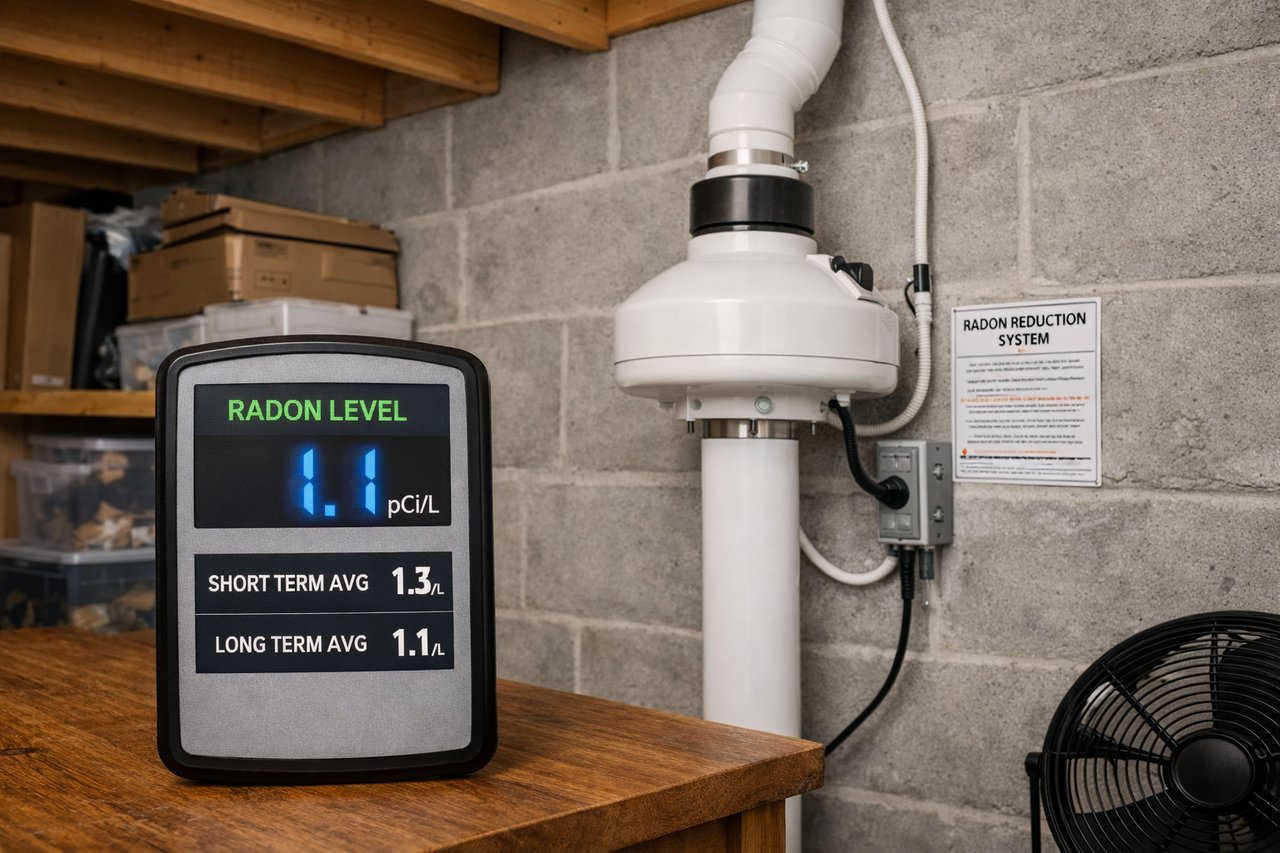
Radon mitigation systems work by safely venting radon gas away from the home before it can accumulate inside.
In many homes, the solution involves installing a pipe that runs from beneath the home’s foundation to a point above the roofline.
A fan inside the system pulls air from beneath the foundation and directs it through the pipe, releasing it safely into the atmosphere.
This process prevents radon from entering the living space.
Some homes are already built with passive radon mitigation systems, which include the vent pipe but no fan.
If radon levels test higher than recommended, adding a fan to convert the system into an active mitigation system is often all that is needed.
Cost of Radon Mitigation
One reason radon rarely stops a transaction is that mitigation systems are generally affordable compared with many other home improvements.
Costs can vary depending on the structure of the home, but mitigation systems often range from roughly $800 to $2,500.
Source: National Radon Program Services
Once installed, these systems typically run continuously and require minimal maintenance.
Most importantly, they are very effective at lowering radon levels inside the home.
Why Radon Shouldn’t Scare Buyers
Because radon is discussed in connection with health risks, it can initially sound intimidating to buyers who are unfamiliar with it.
However, the key thing to understand is that radon is well researched and highly manageable.
Testing is simple, mitigation systems are effective, and solutions are widely available.
For this reason, radon rarely prevents buyers from purchasing a home once they understand how easily it can be addressed.
Thinking About Buying a Home in Knoxville?
Buying a home in Knoxville involves more than comparing listings online. Factors like property conditions, environmental considerations, neighborhood layout, and local services can all influence how well a home fits your lifestyle over time.
The best way to fully understand these details is to walk through them with someone who knows the local market well.
If you're considering buying a home in the Knoxville area, feel free to reach out to our team at Sold With Sinclair. We’re always happy to answer questions, evaluate properties with you, and help you make confident decisions during the home search process.